The New American Order
Reposted from TomDispatch
1% Elections, The Privatization of the State, a Fourth Branch of Government, and the Demobilization of "We the People"
By Tom Engelhardt
Have you ever undertaken some task you felt less than qualified for,
but knew that someone needed to do? Consider this piece my version of
that, and let me put what I do understand about it in a nutshell: based
on developments in our post-9/11 world, we could be watching the birth
of a new American political system and way of governing for which, as
yet, we have no name.
And here’s what I find strange: the evidence of this, however
inchoate, is all around us and yet it’s as if we can’t bear to take it
in or make sense of it or even say that it might be so.
Let me make my case, however minimally, based on five areas in which
at least the faint outlines of that new system seem to be emerging:
political campaigns and elections; the privatization of Washington
through the marriage of the corporation and the state; the
de-legitimization of our traditional system of governance; the
empowerment of the national security state as an untouchable fourth
branch of government; and the demobilization of "we the people."
Whatever this may add up to, it seems to be based, at least in part,
on the increasing concentration of wealth and power in a new plutocratic
class and in that ever-expanding national security state. Certainly,
something out of the ordinary is underway, and yet its birth pangs,
while widely reported, are generally categorized as aspects of an
exceedingly familiar American system somewhat in disarray.
1. 1% Elections
Check out the news about the 2016 presidential election and you’ll
quickly feel a sense of been-there, done-that. As a start, the two names
most associated with it, Bush and Clinton, couldn’t be more familiar,
highlighting as they do the curiously dynastic quality of recent
presidential contests. (If a Bush or Clinton should win in 2016 and
again in 2020, a member of one of those families will have controlled
the presidency for 28 of the last 36 years.)
Take, for instance, “Why 2016 Is Likely to Become a Close Race,” a recent piece
Nate Cohn wrote for my hometown paper. A noted election statistician,
Cohn points out that, despite Hillary Clinton’s historically staggering
lead in Democratic primary polls (and lack of serious challengers), she
could lose the general election. He bases this on what we know about
her polling popularity from the Monica Lewinsky moment of the 1990s to
the present. Cohn assures readers that Hillary will not “be a
Democratic Eisenhower, a popular, senior statesperson who cruises to an
easy victory.” It’s the sort of comparison that offers a certain
implicit reassurance about the near future. (No, Virginia, we haven’t
left the world of politics in which former general and president Dwight
D. Eisenhower can still be a touchstone.)
Cohn may be right when it comes to Hillary’s electability, but this
is not Dwight D. Eisenhower’s or even Al Gore’s America. If you want a
measure of that, consider this year’s primaries. I mean, of course, the
2015 ones. Once upon a time, the campaign season started with candidates
flocking to Iowa and New Hampshire early in the election year to
establish their bona fides among party voters. These days, however,
those are already late primaries.
The early primaries, the ones that count, take place among a small group of millionaires and billionaires,
a new caste flush with cash who will personally, or through complex
networks of funders, pour multi-millions of dollars into the campaigns
of candidates of their choice. So the early primaries -- this year
mainly a Republican affair -- are taking place in resort spots like Las
Vegas, Rancho Mirage, California, and Sea Island, Georgia, as has been widely reported.
These “contests” involve groveling politicians appearing at the beck
and call of the rich and powerful, and so reflect our new 1% electoral
system. (The main pro-Hillary super PAC, for instance, is aiming for a kitty of $500 million heading into 2016, while the Koch brothers network has already promised to drop almost $1 billion into the coming campaign season, doubling their efforts in the last presidential election year.)
Ever since the Supreme Court opened up the ultimate floodgates with its 2010 Citizens United
decision, each subsequent election has seen record-breaking amounts of
money donated and spent. The 2012 presidential campaign was the first $2 billion election; campaign 2016 is expected to hit
the $5 billion mark without breaking a sweat. By comparison, according
to Burton Abrams and Russell Settle in their study, “The Effect of
Broadcasting on Political Campaign Spending,” Republicans and Democrats
spent just under $13 million combined in 1956 when Eisenhower won his
second term.
In the meantime, it’s still true that the 2016 primaries will involve
actual voters, as will the election that follows. The previous election
season, the midterms of 2014, cost almost $4 billion, a record despite the number of small donors continuing to drop. It also represented the lowest midterm voter
turnout since World War II. (See: demobilization of the public, below
-- and add in the demobilization of the Democrats as a real party, the
breaking of organized labor, the fragmenting of the Republican Party,
and the return of voter suppression laws
visibly meant to limit the franchise.) It hardly matters just what the
flood of new money does in such elections, when you can feel the weight of inequality bearing down on the whole process in a way that is pushing us somewhere new.
2. The Privatization of the State (or the U.S. as a Prospective Third-World Nation)
In the recent coverage of the Hillary Clinton email flap, you can find endless references to the Clintons of yore in wink-wink, you-know-how-they-are-style
reporting; and yes, she did delete a lot of emails; and yes, it’s an
election year coming and, as everyone points out, the Republicans are
going to do their best to keep the email issue alive until hell freezes
over, etc., etc. Again, the coverage, while eyeball gluing, is in a
you’ve-seen-it-all-before, you’ll-see-it-all-again-mode.
However, you haven’t seen it all before. The most striking aspect of
this little brouhaha lies in what’s most obvious but least highlighted.
An American secretary of state chose to set up her own private,
safeguarded email system for doing government work; that is, she chose
to privatize her communications. If this were Cairo, it might not
warrant a second thought. But it didn’t happen in some third-world
state. It was the act of a key official of the planet’s reigning (or
thrashing) superpower, which -- even if it wasn’t
the first time such a thing had ever occurred -- should be taken as a
tiny symptom of something that couldn’t be larger or, in the long
stretch of history, newer: the ongoing privatization of the American
state, or at least the national security part of it.
Though the marriage of the state and the corporation has a pre-history, the full-scale arrival of the warrior corporation
only occurred after 9/11. Someday, that will undoubtedly be seen as a
seminal moment in the formation of whatever may be coming in this
country. Only 13 years later, there is no part of the war state that
has not experienced major forms of privatization. The U.S. military
could no longer go to war without its crony corporations doing KP and guard duty, delivering the mail, building the bases, and being involved in just about all of its activities, including training
the militaries of foreign allies and even fighting. Such warrior
corporations are now involved in every aspect of the national security
state, including torture, drone strikes, and -- to the tune of hundreds of thousands
of contract employees like Edward Snowden -- intelligence gathering and
spying. You name it and, in these years, it’s been at least partly
privatized.
All you have to do is read reporter James Risen’s recent book, Pay Any Price,
on how the global war on terror was fought in Washington, and you know
that privatization has brought something else with it: corruption,
scams, and the gaming of the system for profits of a sort that might
normally be associated with a typical third-world kleptocracy. And all
of this, a new world being born, was reflected in a tiny way in Hillary
Clinton’s very personal decision about her emails.
Though it’s a subject I know so much less about, this kind of
privatization (and the corruption that goes with it) is undoubtedly
underway in the non-war-making, non-security-projecting part of the
American state as well.
3. The De-legitimization of Congress and the Presidency
On a third front, American “confidence” in the three classic
check-and-balance branches of government, as measured by polling
outfits, continues to fall. In 2014, Americans expressing
a “great deal of confidence” in the Supreme Court hit a new low of 23%;
in the presidency, it was 11%, and in Congress a bottom-scraping 5%.
(The military, on the other hand, registers at 50%.) The figures for
“hardly any confidence at all” are respectively 20%, 44%, and more than
50%. All are in or near record-breaking territory for the last four
decades.
It seems fair to say that in recent years Congress has been engaged
in a process of delegitimizing itself. Where that body once had the
genuine power to declare war, for example, it is now “debating” in a desultory fashion
an “authorization” for a war against the Islamic State in Syria, Iraq,
and possibly elsewhere that has already been underway for eight months
and whose course, it seems, will be essentially unaltered, whether
Congress authorizes it or not.
What would President Harry Truman, who once famously ran a presidential campaign against a “do-nothing”
Congress, have to say about a body that truly can do just about
nothing? Or rather, to give the Republican war hawks in that new
Congress their due, not quite nothing. They are proving capable of
acting effectively to delegitimize the presidency as well. House
Majority Leader John Boehner’s invitation to Israeli Prime Minister
Benjamin Netanyahu to undercut the president's Iranian nuclear
negotiations and the letter
signed by 47 Republican senators and directed to the Iranian ayatollahs
are striking examples of this. They are visibly meant to tear down an
“imperial presidency” that Republicans gloried in not so long ago.
The radical nature of that letter, not as an act of state but of its
de-legitimization, was noted even in Iran, where fundamentalist Supreme
Leader Ali Khamenei proclaimed
it “a sign of a decline in political ethics and the destruction of the
American establishment from within.” Here, however, the letter is either
being covered as a singularly extreme one-off act (“treason!”) or, as Jon Stewart did on “The Daily Show,” as part of a repetitive
tit-for-tat between Democrats and Republicans over who controls foreign
policy. It is, in fact, neither. It represents part of a growing
pattern in which Congress becomes an ever less effective body, except in
its willingness to take on and potentially take out the presidency.
In the twenty-first century, all that “small government” Republicans
and “big government” Democrats can agree on is offering essentially
unconditional support to the military and the national security state.
The Republican Party -- its various factions increasingly at each
other’s throats almost as often as at those of the Democrats -- seems
reasonably united solely on issues of war-making and security. As for
the Democrats, an unpopular administration, facing constant attack by
those who loath President Obama, has kept its footing in part by allying
with and fusing with the national security state. A president who came
into office rejecting torture and promoting sunshine and transparency
in government has, in the course of six-plus years, come to identify
himself almost totally with the U.S. military, the CIA, the NSA, and the
like. While it has launched an unprecedented campaign
against whistleblowers and leakers (as well as sunshine and
transparency), the Obama White House has proved a powerful enabler of,
but also remarkably dependent upon, that state-within-a-state, a strange
fate for “the imperial presidency.”
4. The Rise of the National Security State as the Fourth Branch of Government
One “branch” of government is, however, visibly on the rise and
rapidly gaining independence from just about any kind of oversight. Its
ability to enact its wishes with almost no opposition in Washington is a
striking feature of our moment. But while the symptoms of this process
are regularly reported, the overall phenomenon -- the creation of a de facto
fourth branch of government -- gets remarkably little attention. In
the war on terror era, the national security state has come into its
own. Its growth
has been phenomenal. Though it’s seldom pointed out, it should be
considered remarkable that in this period we gained a second full-scale
“defense department,” the Department of Homeland Security, and that it
and the Pentagon have become even more entrenched, each surrounded by
its own growing “complex” of private corporations, lobbyists, and allied
politicians. The militarization of the country has, in these years,
proceeded apace.
Meanwhile, the duplication to be found in the U.S. Intelligence Community with its 17 major agencies
and outfits is staggering. Its growing ability to surveil and spy on a
global scale, including on its own citizens, puts the totalitarian
states of the twentieth century to shame. That the various parts of the national security state can act in just about any fashion without fear of accountability
in a court of law is by now too obvious to belabor. As wealth has
traveled upwards in American society in ways not seen since the first
Gilded Age, so taxpayer dollars have migrated into the national security
state in an almost plutocratic fashion.
New reports regularly surface about the further activities of parts
of that state. In recent weeks, for instance, we learned from Jeremy
Scahill and Josh Begley of the Intercept that the CIA has spent years trying to break the encryption
on Apple iPhones and iPads; it has, that is, been aggressively seeking
to attack an all-American corporation (even if significant parts of its
production process are actually in China). Meanwhile, Devlin Barrett of
the Wall Street Journal reported
that the CIA, an agency barred from domestic spying operations of any
sort, has been helping the U.S. Marshals Service (part of the Justice
Department) create an airborne digital dragnet on American cell phones.
Planes flying out of five U.S. cities carry a form of technology that
"mimics a cellphone tower." This technology, developed and tested in
distant American war zones and now brought to "the homeland," is just
part of the ongoing militarization of the country from its borders to its police forces. And there’s hardly been a week since Edward Snowden first released crucial NSA documents in June 2013 when such “advances” haven’t been in the news.
News also regularly bubbles up about the further expansion,
reorganization, and upgrading of parts of the intelligence world, the
sorts of reports that have become the barely noticed background hum of
our lives. Recently, for instance, Director John Brennan announced a major reorganization of the CIA meant to break down
the classic separation between spies and analysts at the Agency, while
creating a new Directorate of Digital Innovation responsible for, among
other things, cyberwarfare and cyberespionage. At about the same time, according to the New York Times,
the Center for Strategic Counterterrorism Communications, an obscure
State Department agency, was given a new and expansive role in
coordinating “all the existing attempts at countermessaging [against
online propaganda by terror outfits like the Islamic State] by much
larger federal departments, including the Pentagon, Homeland Security
and intelligence agencies.”
This sort of thing is par for the course in an era in which the
national security state has only grown stronger, endlessly elaborating,
duplicating, and overlapping the various parts of its increasingly
labyrinthine structure. And keep in mind that, in a structure that has fought hard to keep what it's doing cloaked in secrecy, there is so much more
that we don’t know. Still, we should know enough to realize that this
ongoing process reflects something new in our American world (even if no
one cares to notice).
5. The Demobilization of the American People
In The Age of Acquiescence,
a new book about America’s two Gilded Ages, Steve Fraser asks why it
was that, in the nineteenth century, another period of plutocratic
excesses, concentration of wealth and inequality, buying of politicians,
and attempts to demobilize the public, Americans took to the streets
with such determination and in remarkable numbers over long periods of
time to protest their treatment, and stayed there even when the brute
power of the state was called out against them. In our own moment,
Fraser wonders, why has the silence of the public in the face of similar
developments been so striking?
After all, a grim new American system is arising before our eyes.
Everything we once learned in the civics textbooks of our childhoods
about how our government works now seems askew, while the growth of
poverty, the flatlining of wages, the rise of the .01%, the collapse of
labor, and the militarization of society are all evident.
The process of demobilizing the public certainly began with the military. It was initially a response to the disruptive and rebellious
draftees of the Vietnam-era. In 1973, at the stroke of a presidential
pen, the citizen’s army was declared no more, the raising of new
recruits was turned over to advertising agencies (a preview of the
privatization of the state to come), and the public was sent home, never
again to meddle in military affairs. Since 2001, that form of
demobilization has been etched in stone and transformed into a way of life in the name of the “safety” and “security” of the public.
Since then, “we the people” have made ourselves felt in only three
disparate ways: from the left in the Occupy movement, which, with its
slogans about the 1% and the 99%, put the issue of growing economic
inequality on the map of American consciousness; from the right, in the
Tea Party movement, a complex expression of discontent backed and at
least partially funded
by right-wing operatives and billionaires, and aimed at the
de-legitimization of the “nanny state”; and the recent round of
post-Ferguson protests spurred at least in part by the militarization of
the police in black and brown communities around the country.
The Birth of a New System
Otherwise, a moment of increasing extremity has also been a moment of
-- to use Fraser’s word -- “acquiescence.” Someday, we’ll assumedly
understand far better how this all came to be. In the meantime, let me
be as clear as I can be about something that seems murky indeed: this
period doesn’t represent a version, no matter how perverse or extreme,
of politics as usual; nor is the 2016 campaign an election as usual; nor
are we experiencing Washington as usual. Put together our 1%
elections, the privatization of our government, the de-legitimization of
Congress and the presidency, as well as the empowerment of the national
security state and the U.S. military, and add in the demobilization of
the American public (in the name of protecting us from terrorism), and
you have something like a new ballgame.
While significant planning has been involved in all of this, there
may be no ruling pattern or design. Much of it may be happening in a
purely seat-of-the-pants fashion. In response, there has been no urge
to officially declare that something new is afoot, let alone convene a
new constitutional convention. Still, don’t for a second think that the
American political system isn’t being rewritten on the run by
interested parties in Congress, our present crop of billionaires,
corporate interests, lobbyists, the Pentagon, and the officials of the
national security state.
Out of the chaos of this prolonged moment and inside the shell of the
old system, a new culture, a new kind of politics, a new kind of
governance is being born right before our eyes. Call it what you want.
But call it something. Stop pretending it’s not happening.
Tom Engelhardt is a co-founder of the American Empire Project and the author of The United States of Fear as well as a history of the Cold War, The End of Victory Culture. He is a fellow of the Nation Institute and runs TomDispatch.com. His latest book is Shadow Government: Surveillance, Secret Wars, and a Global Security State in a Single-Superpower World (Haymarket Books).
[Note: My special thanks go to my friend John Cobb,
who talked me through this one. Doing it would have been inconceivable
without him. Tom]
Monday, March 30, 2015
Wednesday, March 18, 2015
The self-licking ice cream cone
Much as witch-hunts were about perpetuating threats so is our war on terror. We've know for some time that drone strikes create more terrorists than it kills. A recently leaked document by Wikileaks show that the CIA knew that Drone strikes are 'counter-productive' and increase support for insurgents. Didn't we already know that? Come on!
War is a racket, we know that already too. But this passage from Operation Rent Seeking is priceless:
War is a racket, we know that already too. But this passage from Operation Rent Seeking is priceless:
"The syndrome the Bush administration created in Iraq was what former Pentagon critic Chuck Spinney has called a “self-licking ice cream cone”: the measures to fight the war on terrorism guaranteed more terrorists, which in turn guaranteed the agencies more money to fight the war on terrorism. The same process was at work with respect to torture and drone strikes. It is a great business model for contractors and bureaucratic empire builders, but far less favorable as a national survival strategy."Chuck Spinney interviewed by Bill Moyers: here.


Saturday, March 14, 2015
The disillusionment of "democratic" corporate fascism

Some articles that crossed my path this week:
The Rise Of A ‘Democratic’ Fascism
The recent 70th anniversary of the liberation of Auschwitz was a reminder of the great crime of fascism, whose Nazi iconography is embedded in our consciousness. Fascism is preserved as history, as flickering footage of goose-stepping blackshirts, their criminality terrible and clear. Yet in the same liberal societies, whose war-making elites urge us never to forget, the accelerating danger of a modern kind of fascism is suppressed; for it is their fascism. "To initiate a war of aggression...," said the Nuremberg Tribunal judges in 1946, "is not only an international crime, it is the supreme international crime, differing only from other war crimes in that it contains within itself the accumulated evil of the whole." Had the Nazis not invaded Europe, Auschwitz and the Holocaust would not have happened. -more-Stop The Fast Track To A Future Of Global Corporate Rule
Several major international agreements are under negotiation which would greatly empower multinational corporations and the World Economic Forum is promoting a new model of global governance that creates a hybrid government-corporate structure. Humankind is proceeding on a path to global corporate rule where transnational corporations would not just influence public policy, they would write the policies and vote on them. The power of nation-states and people to determine their futures would be weakened in a system of corporate rule. The Obama administration has been negotiating the Trans-Pacific Partnership (TPP) and the Trans-Atlantic Trade and Investment Partnership (TTIP) over the past five years, is currently pushing Congress to pass trade promotion authority (known as fast track) which would allow him to sign these agreements before they go to Congress. Then Congress would have a limited time to read thousands of pages of technical legal language, debate the contents and be banned from making amendments. -more-The Illusion Of Democracy
It is ironic, considering democracy's pitiful state worldwide that, in accordance to its etymology, it literally means "common people's rule" or, more simply, "people's power." The English term democracy and the 14th-century French word democratie come from the Greek demokratia via the Latin democratia. The Greek radical demos means "common people," and kratos means "rule, or power." How did we manage to pervert such a laudable notion of power to the people and diametrically turn it into a global system of rule at large under the principles of oligarchy and plutocracy? Everywhere we look, from east to west and north to south, plutocrats and oligarchs are firmly in charge: puppet masters of the political class. They have transformed democracy into a parody of itself and a toxic form of government. The social contract implied in a democratic form of governance is broken. -more-Rahm Emanuel, Face Of Democratic Fascism, Deserves To Lose
Chicago's mayoral election may look like a local event, and the media mostly cover it as a local event, but the presence of a large, diverse, and energized opposition demanding change on basic issues of fairness and justice gives the city's local result a potentially important, totemic meaning for the country. The outcome of the April 7 runoff election, which includes 40% of the city council as well, may signify whether peaceful change is possible, or whether the suffocating status quo will grow more stifling. There is another way of gauging the April vote: is Chicago yet ready to reject the police state practices of its local government? Is Chicago ready to reject a mayor who seems content to allow police state behavior to go unexamined and unpunished? -more-How the Public Are Deceived by the ‘News’
If the public is systematically lied-to
by the Government and by a virtually uniformly cooperative press
suppressing key facts in order to pump that lie, such as was the case
during 2002 and 2003 in the lead-up to America’s invasion of Iraq, then
there can’t possibly be an authentic democracy, because democracy is
founded upon a truthfully informed public, and so any ‘news’ institution
that violates its solemn public trust of reporting the truth, the whole
truth, and nothing but the truth, is traitorous to democracy itself. That’s why the press has been called “the
fourth estate” of government. The first three “estates” are the
aristocracy, the clergy, and the public. If the press represent not the
public, but instead one of the two other classes — the aristocracy
and/or the clergy — then what exists is a dictatorship by that actually
ruling class against the public, not a democracy by the public. The
public cannot rule in such a country. They instead are manipulated in
it. -more-
For a Crime He Didn't Commit
This nightmare is an example of our criminal justice system that is typical of a totalitarian bureaucratic state. A man was coerced into a false confession for a crime he didn't commit. He was convicted and went to jail. He couldn't prove his innocence until he got out of jail but he couldn't get out of jail until he confessed his "crime" and showed remorse. The ultimate catch 22! Listen to the story here or read the story here. More from the Innocence Project: here
American democracy is doomed
America's constitutional democracy is going to collapse. Some day — not tomorrow, not next year, but probably sometime before runaway climate change forces us to seek a new life in outer-space colonies — there is going to be a collapse of the legal and political order and its replacement by something else. If we're lucky, it won't be violent. If we're very lucky, it will lead us to tackle the underlying problems and result in a better, more robust, political system. If we're less lucky, well, then, something worse will happen. Very few people agree with me about this, of course. When I say it, people generally think that I'm kidding. America is the richest, most successful country on earth. The basic structure of its government has survived contested elections and Great Depressions and civil rights movements and world wars and terrorist attacks and global pandemics. People figure that whatever political problems it might have will prove transient — just as happened before. -more-Update:
The PTB (Powers That Be) want you to feel afraid, powerless, desperate and apathetic. Don't fall for that. Stay positive! These systems of power were built by humans and they can be dismantled by humans.What we can do:
Sunday, March 8, 2015
Sheriffs from Colorado, elsewhere sue state over legal pot
 | ||||||||||||||
| arbiteronline.com |

By Kristen Wyatt, Associated Press
March 5, 2015 1:58 PM
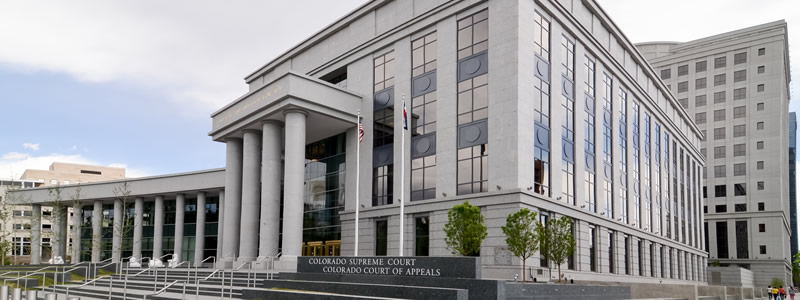
Sheriffs, lawyers from 3 states sue Colorado over marijuana legalization
 |
| www.courts.state.co.us |
The sheriffs from Colorado, Kansas and Nebraska say that Colorado's 2012 marijuana legalization vote violates federal law and shouldn't be permitted.
"A
state may not establish its own policy that is directly counter to
federal policy against trafficking in controlled substance," the
sheriffs argue in the lawsuit filed in U.S. District Court in Denver.
The lawsuit is the latest legal challenge to legal weed. Separately, Nebraska and Oklahoma have appealed to the U.S. Supreme Court to strike down marijuana legalization in Colorado. The Supreme Court hasn't said yet whether it will hear that case.
And a group of Colorado residents has filed its own federal challenge, saying marijuana reduces property values.
 |
| en.wikipedia.org |
"The scheme enacted by Colorado for retail marijuana is contrary and obstructive" to federal drug laws, the sheriffs argue.
Marijuana legalization opponents joined a news conference in Washington, D.C., Thursday and praised the legal challenges.
"Although
states should be able to determine appropriate penalties, we need
uniform federal drug laws regarding legalization," Kevin Sabet, head of
the group Smart Approaches to Marijuana, said in a statement.
But the lawsuit was brushed off by others, including U.S. Rep. Jared Polis, a Colorado Democrat who supports legal marijuana.
"This lawsuit is a silly attempt to circumvent the will of Colorado voters and is a waste of time," Polis said in a statement.
The
Colorado plaintiffs are Larimer County Sheriff Justin Smith, Yuma
County Sheriff Chad Day, Elbert County Sheriff Shayne Herp, Hinsdale
County Sheriff Ronald Bruce, Kiowa County Sheriff Casey Sheridan and
Delta County sheriff Frederick McKee.
The
Nebraska plaintiffs are Deuel County Sheriff Adam Hayward, Deuel County
Attorney Paul Shaub, Cheyenne County Sheriff John Jenson and Scotts
Bluff County Sheriff Mark Overman.
The
Kansas plaintiffs are Sherman County Sheriff Burton Pianalto and
Charles Moser, attorney for Sherman, Wallace and Greeley counties.
Colorado's
attorney general, which will defend the state pot law in all three
lawsuits, did not immediately respond to the sheriffs' filing Thursday.
Colorado has until March 27 to respond to the lawsuit from Nebraska and Oklahoma.
___
Kristen Wyatt can be reached at http://www.twitter.com/APkristenwyatt
___
Online:
Sheriffs lawsuit: http://bit.ly/1MaFu6Vhttp://news.yahoo.com/sheriffs-colorado-elsewhere-sue-state-185852133.html
'I agree with Polis, this is indeed a waste of time!!!'
Subscribe to:
Posts (Atom)